Saturday, July 31, 2010

Pera Palas Renewed......


This is an undated photo provided by the hotel management of the Pera Palace which shows the main hall of Pera Palace in Istanbul, Turkey. It was the last stop on the Orient Express, a grand hotel with Istanbul's first electric elevator where artists and aristocrats sipped champagne beneath chandeliers as the Ottoman Empire dissolved and the world drifted toward war. On Sept. 1, the Pera Palace will re-open after a two-year restoration that cost euro23 million ($30 million), seeking to capture the lost sparkle of what was one of Istanbul's most prominent landmarks.(AP Photo/Pera Palace,HO)
Istanbul landmark seeks return to glory era
ISTANBUL — It was the last stop on the Orient Express, a grand hotel with Istanbul's first electric elevator where artists and aristocrats sipped champagne beneath chandeliers as the Ottoman Empire dissolved and the world drifted toward war.
Mata Hari, accused of spying and executed in France in 1917, stayed at the Pera Palace Hotel. So did Greta Garbo, who played the shadowy dancer in a 1931 movie. Ernest Hemingway checked in to report on war between Turks and Greeks. Agatha Christie is said to have crafted "Murder on the Orient Express" in Room 411.
Then, like the empire it outlived, the hotel slid into decay.
On Sept. 1, the state-owned Pera Palace will reopen after a two-year restoration that cost 23 million euros ($30 million), seeking to capture the lost sparkle of what was one of Istanbul's most prominent landmarks. It is no longer the lone luxury hotel on a hill above the Golden Horn inlet. The former Ottoman capital teems with high-end accommodation, some in restored imperial mansions along the Bosporus Strait that divides the Asian and European continents.
Pinar Kartal Timer, general manager of the Pera Palace, believes fabled guests of the past will bestow new glory on the hotel, which held its opening ball in 1895.
"These people have left their traces in this hotel," Timer said in an interview in the 115-room hotel Wednesday. Major structural work and painting was complete, but the old ballroom was empty and the mother-of-pearl bookshelves had not been installed. Workers hammered, and layers of cardboard and plastic covered some balustrades and marble-floored passageways.
The Pera Palace mirrors the revival of the surrounding Beyoglu area, historically known as Pera, which comes from the Greek word for "beyond." It was nicknamed "Little Europe" in the late 19th century, an enclave of Greek and Armenian entrepreneurs, along with European diplomats and businessmen who imported luxury goods from capitals to the west.
Many local residents fled deadly unrest or moved to outlying areas, leaving neglected stone facades to brood in the narrow, trash-filled streets. In the last decade, shops and restaurants flooded the central neighborhood as economic fortunes and pride in Istanbul's heritage blossomed.
Mehmet Karaoren is a partner in an architectural firm that snapped up a dozen Pera buildings, restoring them and selling or renting the refitted apartments. In some years, the prices of their properties have doubled.
"In the beginning, this was a game for us. It became a business," said Karaoren, who sought inspiration for his restorations during travels to Paris, London and New York City.
A commission linked to Turkey's Culture Ministry bars changes that would taint the historical integrity of a structure, though allowances are made for reinforcement against earthquakes and the installation of elevators in tall buildings with dimly lit, winding staircases.
Business interests and a lack of political will have sometimes trumped the work of conservationists. Istanbul, home to relics and monuments from the Roman, Byzantine and Ottoman empires, is at risk of being placed on a list of endangered cultural treasures by UNESCO's World Heritage Committee. That would be a serious embarrassment since the European Union designated the city as its "cultural capital" this year.
David Michelmore, an international conservationist, said unrestored sections of old Pera were at risk of demolition, and he compared the area to London's Notting Hill district in the 1960s, a shabby area before its successful rehabilitation.
"It's not tourists mostly, it's Turkish people who are going there," Michelmore said. "Historic centers have a huge capacity for serving purposes of recreation and relaxation."
The original owner of the Pera Palace was Compagnie Internationale des Wagons-Lits, which operated the Orient Express luxury train line. A Turkish conglomerate, the Besiktas Group, now manages the hotel. It has a modern spa and an indoor pool, as well as new elevators to supplement the original wood and cast iron one.
The building is a mix of styles distinctive to 19th century Istanbul — neo-classical, art nouveau and oriental. Rooms have handwoven carpets and antique furniture mixed with the new. Sixteen are suites named after guests including Britain's King Edward VIII and Austro-Hungarian Emperor Franz Joseph I.
Basic room prices start at 185 euros ($240), excluding tax and breakfast, but go higher in peak season. Ahead of the September opening, they are 265 euros ($350).
Nobody will sleep in Room 101. Mustafa Kemal Ataturk, a former army officer who founded Turkey in 1923, once used it as a base. The room will house a museum of items belonging to Ataturk, including hats, slippers and dignitaries' gifts.
The hotel hosted spies as well as statesmen. Kim Philby, the British-Soviet double agent, was nearly unmasked in Istanbul, and the agent codenamed Cicero, valet to the British ambassador in Ankara, visited as he sold secret documents to German agents in World War II.
A witness to tumult, the Pera Palace became a target in 1941 when a bomb exploded at the entrance shortly after the arrival of a British diplomatic party from Bulgaria, which had sided with the Nazis. Several people died.
Hemingway drank at the hotel's Orient Bar in the early 1920s. In his story, "The Snows of Kilimanjaro," the main character, a writer, recalls a brawl over a woman with a British soldier in Istanbul. He slept with the woman that night:
"...and he left her before she was awake looking blousy enough in the first daylight and turned up at the Pera Palace with a black eye, carrying his coat because one sleeve was missing."

Anti-Government Cartoons in the Turkish Press

Anti-Government Cartoons in the Turkish Press

bogazimda bir baseball tikandi konusamiyor bagiramiyorum......RTE giderek netlesti dusunceleri ve beklentileri......birde buna "life coach"luk denemelerini katabilirsiniz.......gaggggging


"Kadın ve erkeğin eşit olması mümkün değil"

Erdoğan: "Kadın kadındır erkek erkektir. Bunların eşit olması mümkün mü? Bunlar birbirinin tamamlayıcısıdır"

31 Temmuz 2010 Cumartesi, 18:09:11
"Kadın ve erkeğin eşit olması mümkün değil"
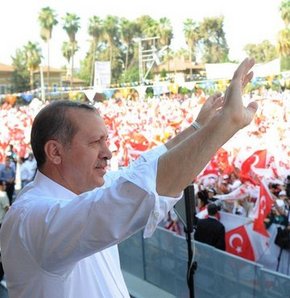
Başbakan Recep Tayyip Erdoğan. Kadın ve erkeğin fiziksel olarak hiçbir zaman eşit olamayacağını belirterek, "Kadın kadındır erkek erkektir. Bunların eşit olması mümkün mü? Bunlar birbirinin tamamlayıcısıdır." dedi
Başbakan Erdoğan referandum kampanyası çerçevesinde geldiği Hatay'da Hakkari, Şırnak ve Amanoslarda şehit olan 3 asker adına TOKİ tarafından yaptırılan okulların açılışını yaptı. Şehit Ömer Faruk Adaş İlköğretim Okulu, Şehit Mustafa Dolunay Anaokulu ve Şehit Süleyman Yılmaz Lisesi'nin açılışını yapan Başbakan Recep Tayyip Erdoğan, törende Hatay'ın ilçelerinde bulunan 15 okulun da toplu açılışı gerçekleştirdi.

Başbakan Recep Tayyip Erdoğan, açılışı yapılan okullarda 330 derslik bulunduğunu ve bu okulların 23 milyon TL'ye mal olduğunu belirterek, ''Bunlar insanımızın hayat standardını yükseltecek, cehaletle mücadelede bizi başarılı kılacak adımlardır. Türkiye'nin kalkınması için AK Parti Hükümeti 4 temel unsur konusunda adımlar atmıştır. Bunlar adalet, sağlık, eğitim ve güvenliktir." dedi.
Hükümetin yaptığı hizmetlerden örnekler veren Başbakan Erdoğan, "Sağlıkta Türkiye'nin dört bir yanında hastanelerimizde artık insanca sağlık hizmeti veriliyor, tedaviler gerçekleştiriliyor. Hastanelerde koğuş sisteminden tek odalı, çift odalı banyolu tuvaletli odalara geçiş yaptık. Önceden böyle bir sistem yoktu. Sağlam girseniz hastanelerden hasta çıkardınız. Böyle bir durum vardı. Ama şimdi sistem değişti. Vatandaşlar tedavinin yanı sıra ilaçlarını da çok rahat bir şekilde alıyor. İlköğretimde erkek öğrencilere 20, kız öğrencilere 25 lira, aynı şekilde orta öğretimde erkek öğrencilere 35 lira, kız öğrencilere de 45 lira destek veriyoruz. Bu yardımı, bu desteği anneye veriyoruz, babaya değil. İşte kadın-erkek eşitliğinin istismarını yapanlara söylüyorum. Bak bu sadece bir tanesi. Biz burada anneyi ön plana çıkarırken şefkatte anne, babaya göre daha farklı olduğu için bu adımı, bu tercihi yapıyoruz, istismarını değil. Cennet annelerin ayakları altına boşuna konulmadı." şeklinde konuştu.

Başbakan Erdoğan, konuşmasının ardından okullarda incelemelerde bulundu.
Okulların açılışı sırasında geniş güvenlik önlemleri alınırken alanda sinyal kesici jammerler hazır bulunduruldu. Çatılara keskin nişancılar yerleştirilirken açılışa katılmak isteyen vatandaşlar tek tek arandı. Başbakan Erdoğan konuşmasını yaparken korumaları da çocuklara oyuncak dağıttı. Törenin sonunda İsmi okullara verilen şehitlerin yakınlarına şehitlik beratı verildi. Başbakan şehitlerin geride kalan çocuklarına yakın ilgi gösterdi.

UNESCO decision gives Istanbul another chance - Hurriyet Daily News and Economic Review

UNESCO decision gives Istanbul another chance - Hurriyet Daily News and Economic Review

Friday, July 30, 2010

Welcome to Turkey

My interview/article with Ahmet Ertegun

February 2002
1940's DC, Jazz and the Turkish Connection:

The Ahmet Ertegun Story

By Ayse Sumer, Photographs Courtesy of Atlantic Records Archive & Ayse Sumer

My interview with the Chairman and founder of Atlantic Records Ahmet Ertegun took place a week before the holiday season in December. I was very much looking forward to this meeting, as it would be my first time to meet Mr. Ertegun. Before going up to New York, I read his newly published book “What’d I Say” The Atlantic Story 50 Years of Music. A fascinating book and a tour de force of the history of music. It’s especially enlightening for those who are interested in the history of African-American music. The book was put together and published by his godson, a part-time publisher.
“To an extent, the history of Atlantic Records mirrors the history of those times.” Ahmet Ertegun

The American Friends of Turkey and American-Turkish Council wanted to take this opportunity to honor the man who made jazz and the musicians’ legends in their own right.

The entrance to the offices at Atlantic Records HQ in Manhattan is similar to a TV studio with the many TV screens showing performer video clips on the wall behind the receptionist. I was ushered into the conference room where I set up my equipment. Although he had some health problems recently, Mr. Ertegun looked very fit and was very much the gentleman as he kindly gave me over two hours of his time.

The main purpose of this interview was to get the background story about the early days when Ertegun came here together with his father who was appointed as the Turkish Ambassador to the United States in 1934. Ahmet and Nesuhi Ertegun were brothers who were instrumental in putting together the first integrated concert in Washington, and bringing to the forefront American black music and its influence on all forms of modern music. In the beginning they did this purely out of love and interest in music. I hope you will enjoy reading this fascinating and wonderful story as much as I enjoyed writing it.

The history of Atlantic Records is a history that spans over the years. So I shall start from the beginning.

Ahmet Ertegun was 12 years old when he came to the United States in 1935. He attended a prep school in Washington, DC and upon graduation went on to St. John’s College in Annapolis. He attained his Graduate degree in Philosophy from Georgetown University. His older brother Nesuhi Ertegun was studying at the Sorbonne University, Paris, but at the break of WWII in 1938 he joined his family in Washington, DC.

“I was initiated to jazz music at a young age by my brother Nesuhi. When my father was the Ambassador in England, my brother took me to the Palladium, a big variety hall theater where we went to hear Cab Calloway and his orchestra, and later Duke Ellington. These were very, very moving experiences for me. We later became great friends with Duke Ellington, and Cab Calloway. Our growing net of friends in the industry included jazz musicians such as Benny Goodman and Tommy Dorsey, most of whom were not Atlantic artists.

The musician in the family was my mother. She played many instruments, she really loved Turkish music. She was also a very good singer. At times she would play American music with the Turkish instruments or on the piano in a way that sounded like Turkish music. My father was not musical at all and did not care for music, but he was a very liberal and just man and enjoyed meeting our friends.”

On life in Washington, DC and jazz music:

"Washington, DC during the 1940's was totally segregated. It is very hard to conceive of this today, but in those days there were no department stores that would allow black people in as customers, no restaurants, no movie houses or theaters with white patrons. Black people could not go to clubs that whites frequented. It was only in burlesque theaters, looked down upon by everyone, where people like Gypsy Rosalee played, with strip shows, burlesque comedy, a type of vaudeville that had an integrated audience. In these, one could see blacks but only in the balconies. It was always segregated. That was the closest to where any contact between the whites and the blacks took place."

"I was very much involved with the black culture due to my interest in jazz music, I spent a lot of time looking for recordings of music, and became interested in the black theaters where a lot of the jazz musicians played."

"My brother Nesuhi and I befriended many of the people who were as interested in jazz music as we were. The black professors at the Howard University especially the Dean of the School of English Literature Sterling Brown, a very important novelist who wrote the famous book, The Southern Rogue, as well as several other faculty members, were our friends. We also were closely associated with the black intelligencia and members of the Washington black society. Our common interest in jazz brought all of us together. These people were frequent guests of ours at the Turkish Embassy."

"During those days it was very unusual to see black people in white neighborhoods unless they worked there. We had many parties at the Embassy. Every Sunday we had open lunch for friends. All the jazz enthusiasts would come over. Whichever band was in town such as the members of Duke Ellington's group, or Louis Armstrong; they would come to play. It came to everyone's attention that we had black people coming over as guests to the Turkish Embassy. It was not the custom to have black people enter from the front door. So one day my father received a note from a Southern Senator who said that it was a custom in America for black people to enter a house from the back door of a white person's house. My father wrote back saying that his credo was learned by living in a tekke, a religious halfway house, where their motto is that all human beings entered from the front door and that continued in his house. People were not distinguished by their color or creed, all human beings enter from the front door and that continues in this house, our house."

"Everyone then understood and accepted the status quo. I remember that I would usually be a minority. People knew of my interest in jazz and thus association with the black communities. At that time, I dated a girl whose father was a navy admiral. Always the question of color came up in our conversations. The admiral once told me that blacks were happier living on their own, just as white folks were happier with the separation, and nobody wanted to mix. I responded by saying that they may not wish to live with whites, but they definitely wanted to be given equal access to the same opportunities, rights and similar living conditions as all Americans."

"Blacks were relegated in every way to a lesser life than whites. It took a long time to overcome this state. 1960's and the Civil Rights Movement made a lot of difference. Also, to a great extend the end of WWII was the beginning of the Civil Rights Movement. The black soldiers who fought in the war were not prepared to come back home and accept the indignities they suffered before the war."

The story of the first integrated concert in Washington, DC:

Two young Turkish men, Moslems, organized the first integrated concert that was held at a Jewish center; music played by a mixed jazz orchestra and with a mixed audience. A definite historical feat to be remembered!

“As our friendship with jazz giants such as Duke Ellington, Jelly Roll Morton, Louis Armstrong and Lena Horne grew, we came up with the idea of holding the first integrated concert in Washington. It became very difficult to find a place to stage this concert event in Washington. In the end the Jewish community center was the only place that allowed a mixed audience and a mixed band. We had black and white musicians on stage, and an integrated audience. The musicians who played that night consisted of Joe Turner, Pete Johnson, Pee Wee Russell, Sidney Bechet and others. Our MC was Willie Bryant, who took on this role for some of the other concerts my brother and I staged in DC. After that concert the National Press Club broke down and let us use their auditorium for our future concerts.”

The arrest in Annapolis:

"The incident in Annapolis was something that happened all the time. Annapolis at that time was an old Southern town with strong traditional attitudes. We often went to the black clubs there. One night as we came out of the club, we were arrested by a couple of policemen. They took us to the courthouse. I asked the judge what crime I had committed. He told me that we broke the Jim Crow law. When I asked what law was that and where it was written, he told me nowhere. Apparently, it was a law understood by everyone. He said that we had disturbed his night by having him come all the way to the courthouse. It was just an example of the attitudes of the day. When he found out that I was the son of a diplomat, he released us."

"This was nothing compared to the great indignities that the black people were put through in those days. To a great extent the South was the worst in its treatment of black people. Segregation was the strongest in states like Mississippi and Alabama. I hate to tell you this but similar incidents and treatments took place in liberal cities such as New York and Boston, where you would expect a greater mixture of races. This attitude has not totally dissipated yet. The other day someone said that there is a great deal of integration today. Yes, there is the Budweiser commercial, but I still do not see black & white workers celebrating or having a party together. We are still living in a segregated society in America. It is not enforced as it was in the old days, but it is by choice on both sides. It will take a long time for people to get used to the idea of communicating with one other."

The start of Atlantic Records:

"I was 22 when my father died. I was very intent on doing something with music, so I started Atlantic Records. I borrowed $10,000 from my dentist Dr. Vahdi Sabit. He became a partner with a 50% interest. I had never worked in my life and had no idea about business, only about music. My other partner was Herb Abramson, who had more knowledge of business. Six years after we started we bought out Dr. Sabit's shares. My original partner went into the army, and I brought in Jerry Wexler and my brother Nesuhi who was living in California and owned his own jazz company. We were successful and we grew. The music we made filled a void. We had no real strong competition that specialized in the music that America loved real American music. Until that time, America was fed movie music and European music, not the music they really wanted. We believed we knew the music they wanted. That music became Rhythm and Blues, Rock & Roll, Rap, and the Hip-Hop of today. The history of Atlantic & the history of today are really wrapped up in the lives of the great musicians and singers who we had the good fortune to be associated with.

We grew and expended into other genres of music. Soul artists such as Aretha Franklin contrasted on the other side Bobby Darren, who was one of the first Grammy winners. We also signed musicians such as Buffalo Sprinfield, out of which grew Crosby Stills Nash &Young.
The British invasion came with Eric Clapton and Cream, Yes, Bee Gees, Emerson Lake and Palmer, King Crimson, and then Led Zeppelin, the strongest influenced R&R band today. We had Rolling Stones for 15 years and Abba and Genesis, out of which came Phil Collins. Now we have Plant and Page (Robert & Jimmy respectively).
On Turkish and other Ethnic music and musicians:

"As Italian, Spanish and Hungarian music, Turkish music is beautiful. Most of this music does not travel. It is very popular in their own country of origin. On the other hand, as soon as it was heard in the 1920's, American Black music became the music of the world. During the 1920's and onward, everyone danced to the foxtrot, Charleston, bunny hop, and jazz bands. The jazz bands were either black or imitations of black music. With the advent of swing music, musicians such as Benny Goodman imitated big black orchestras. Elvis Presley and the Beatles arrived and they imitated Chuck Berry, Ray Charles etc. Once in a while music travels out of its origins like the Bosa Nova or Reggae. Nowadays there is great interest in oriental music especially in Central Europe. Tarkan is one of them. His Turkish records were very successful. You cannot make talent it’s just there. We only just record it. The fans and listeners will tell you if you are great. When 10,000 people ask you to sing again and again, that is something."
On the tragic events of September 11 and the war against terrorism:

"I think that there are a lot of terrible governments in the world today. There are dictators who believe in things that are anti-modernists and against democracy. I think that the American way of valuing democracy, free trade, justice, equality and freedom are very important. These ideals must be taught to young people. Young people can be brainwashed and forced to believe in all sorts of things, but are also prone to loving certain movies, actors, music and dancing they are exposed to on the television. We saw the blue jean, hamburger, fast food and Rock & Roll explosion. This is what eventually will topple those governments, as it toppled the communist states and dictators who are the perpetrators of injustice throughout the world. In addition, change comes from young people espousing the values associated with these cultural changes. Whether people like it or not, the world is becoming more modern each day. It is with education, freedom of thought and communication that we will continue to achieve this ideal. Dictators will be eradicated through communication and a love of Rock & Roll developing in a previously “closed” society. This is one of the symptoms of this wonderful re-awakening of the world.

The Ugly Face of Domestic Abuse in Turkey

Domestic abuse still a taboo in Turkey  By Ivan Watson and Yesim Comert, CNN


Kapikoy, Turkey (CNN) -- Hamide Yeni is a woman on the hunt.

The women's rights activist wears a determined expression on her face as she paces the dirt roads of this remote village, looking for the man who Turkish authorities say beat his wife and put her in a hospital twice in less than 12 months.
"Have you seen Faruk?" she asks the village mayor's daughter. "He disappeared with his car."

"No one's seen him," the woman replies. Some other villagers retreat behind the mud-brick walls of their homes as Yeni approaches.

The man Yeni is looking for is Faruk Platin, one of the 600 residents of Kapikoy.
Last fall, a court sentenced him to 15 months in prison for assault, after his 30-year old wife Sidika was hospitalized with trauma wounds.

Video footage filmed in September of 2009 shows Sidika outside of the hospital in the provincial capital of Van. Her face was horribly bruised; her head encased in bandages. Part of Sidika's right ear had been sliced off. The woman could barely walk and leaned on her brother for support, as she hobbled a few short steps into the hospital.
After the incident, Turkish authorities separated Sidika Platin and her children from her husband and placed them in a state-run women's shelter. But barely two months later, a local criminal court asked that Sidika and her children be handed back to Faruk Platin. He had not served any jail time for beating his wife.
"At that time, because he showed regret and because his [criminal] record was clean, his sentence was postponed," said Meral Demirbas, the governor of Saray district where Kapikoy is located.
"Also, the wife withdrew her complaint."
Sidika Platin is an ethnic Kurd who speaks no Turkish. According to eyewitnesses, when she appeared in court, she could not understand the judge or prosecutor, and relied on her husband to translate legal proceedings.
On a snowy day last December, local women's rights activists like Hamide Yeni could do little more then watch helplessly, as Faruk Platin led his mutilated wife away from the courtyard, back to the village where they lived.
"This kind of thing happens in every village," says Yeni, one of the founders of a grassroots local family protection association in the Saray district of southeastern Turkey. "There are thousands of women like Sidika out here.
In fact, according to a 2009 Turkish government report, 42 percent of women surveyed said they had been the victims of either physical or sexual abuse by their husband or partner. The report concluded that one in four married Turkish women had been injured by partner violence. Meanwhile, one in 10 Turkish women were injured by such violence while pregnant.
Some Turkish activists fear the real statistics for violence against women may actually be much higher.
"In all domestic surveys there are 'shadow figures.' That is because women are not willing to tell about the violence, it's a very sensitive issue," says Pinar Ilkkaracan, a co-founder of the Istanbul-based group Women for Women's Human Rights.
"We think it's much higher then 42 percent."
Domestic violence against women is not confined to economically-depressed, rural regions of eastern Turkey. According to the Turkish government survey, the statistics for physical and sexual assault were roughly the same in the countryside as in the most developed, fast-growing cities in the western part of the country.
Over the past 15 years, Turkey has adopted several progressive pieces of legislation to protect women, including a 1998 Protection Order against Domestic Violence. Reform of Turkey's Civil Code in 2001 gave women legal equal status to men in the family.
Meanwhile, changes to the country's Penal Code in 2004 criminalized marital rape. But critics argue that the Turkish state has lapsed far behind in implementing these laws

"The law prohibits violence against women, including spousal abuse, but the government did not effectively enforce it," the U.S. State Department said in its 2009 human rights report on Turkey.

Despite widespread violence against women, in 2009 the Turkish government reported there were only 52 state-run shelters for women in the entire country. Those shelters have the capacity to house less then 1,300 residents, in a country where the population exceeds 70 million.

"There is a lack of coordinated action and strong will on the part of the government to stop violence against women," says Ilkkaracan.

Not long after Sidika Platin returned to the village of Kapikoy, neighbors and relatives began contacting authorities, reporting that her husband was once again beating her.
But Sidika's parents and siblings said Faruk Platin repeatedly threatened them when they tried to intervene. Sidika's brother claims on one such occasion, his brother-in-law beat him up.

"That man started beating my daughter the day she put on her wedding dress and he has been violent with her ever since," said Cemile Ozer, Sidika's mother. "I wish he killed her long ago to spare her all the suffering."

In early July, gendarme security forces were summoned to the crude house where the Platin family lived.

Niyazi Yakin, a member of the Kapikoy village council and a relative of Faruk Platin, says he personally asked Sidika if she was being abused, and she said no.

"She deserved what happened," Yakin said. "Because we gave her the chance to leave him and she didn't."
On July 15, Faruk Platin brought his wife to the hospital in Van.  "When the doctors discovered that she was battered, the husband escaped," the Van Social Services Directorate announced in a written statement on July 19.
Doctors at Van hospital said Sidika had trauma marks on various locations on her head, infections from injuries, a fever and there was a third-degree burn in the shape of an iron on her back.
"It looked as if she had been tortured," one Van hospital doctor told CNN, on condition of anonymity because he was not authorized to give an interview.
Though there was no evidence of brain damage, for more then two weeks after being hospitalized, Sidika was in a near-catatonic state, unable to move or respond to questions.
Hakan Cankaya, the deputy chief doctor at the hospital, said psychiatrists suspected she suffered from extreme post-traumatic stress disorder. He added that the hospital frequently received female patients who appeared to be victims of abuse.
"Usually if a woman comes in who has been beaten, she will say 'I fell down the stairs' or 'I bumped into the refrigerator," Cankaya said. "It stays in the family...and as doctors, we cannot interfere."
Meral Demirbas, the district governor of Saray, told CNN an arrest warrant has been issued for Faruk Platin, who is on the loose.

But Hamide Yeni says that is not enough.
"The state is guilty, the system is guilty," she says. "It failed to protect the victim."
The governor of Van province and Turkey's minister of state responsible for women's and family affairs did not respond to numerous requests from CNN to comment on the case. Both officials have made visits to Sidika's bedside in Van hospital.
In village of Kapikoy, where many residents eke out a living herding sheep, Yeni goes house to house, dressed in a long skirt and loose headscarf, asking locals why they did not speak up about the violence that had been taking place in their community.

"It wasn't our responsibility," insists Saban Altinli, a brother of the village muhtar, or mayor.

"When there is violence, it doesn't matter if it's your relative," Yeni responds. "You can still make a call and inform that this woman is being beaten."

Iran: Talks on nuclear swap deal should be held in Turkey - Haaretz Daily Newspaper | Israel News

Iran: Talks on nuclear swap deal should be held in Turkey - Haaretz Daily Newspaper Israel News

1915 Events at LA Federal Court

By Ashby Jones


In recent years, most of the debate in this country concerning the events that led to the deaths of 1.5 million Armenians in 1915 has revolved around whether they should be classified as genocide on the part of Turkey.


But a lawsuit filed on Thursday in Los Angeles asks a different question: whether the heirs of the Armenians whose property was allegedly seized should be able to recover for their losses.


The suit was filed on behalf of two men of Armenian ancestry: Garbisn Davouyan of Los Angeles and Hrayr Turabian of Queens, NY, and seeks compensation for property allegedly seized by Armenians, along with bank deposits and property.


The lawsuit claims the government of Turkey agreed to administer the property, collect rents and sale proceeds from the seized assets and deposit the receipts in trust accounts until the property could be restored to owners.

Instead, the government has “withheld the property and any income derived from such property,” the lawsuit said.

The defendants: the Republic of Turkey and two Turkish banks. Click here for the AP story; here for the complaint.

Undoubtedly, there are some potential difficulties to suing over activities that began about 100 years ago, namely a statute of limitations.


The plaintiffs attempt to head this off entirely, arguing in their complaint that the statute has yet to begin to run because, due to “fraudulent concealment” on the part of the defendants, plaintiffs were unable to bring their suit until now. Plaintiffs also claim the “Defendants misconduct is ongoing.”

The lawyers bringing the case include Brian S. Kabateck and Richard L. Kellner of the Los Angeles-based firm Kabateck, Brown & Kellner and Mark Garagos of Las Vegas-based Geragos & Garagos.

A message left by the AP with the Turkish Consul General’s office in Los Angeles was not immediately returned. E-mails seeking comment from both banks were not immediately returned.

http://blogs.wsj.com/law/2010/07/30/events-in-turkey-from-1915-find-way-to-los-angeles-federal-court/

War in Afghanistan

http://www.huffingtonpost.com/2010/07/30/four-more-years-of-war_n_664853.html?utm_source=DailyBrief&utm_campaign=073010&utm_medium=email&utm_content=NewsEntry

Plastic Bertrand - Ca plane pour moi

Euro Stocks down

http://online.wsj.com/article/SB40001424052748703578104575396430416105668.html?mod=djemeeurope_t

How I came to be.....

Everyone has a beginning and mine starts like this.....

I was born in Ankara, on the 1st of May, near Anitkabir......My father was working for the UNDP, an international staff member, so I consider myself a child and a product of United Nations.  I am proud to say this (I know now-a-days not many people have a liking to the UN - rightly or wrongly - but it was the UN that enabled me to live the life that I lived with my family so I will always have a special place for it in my heart and life.)

We left Turkey when I was 8 years old. Libya was the first country that we went to - if only I had know that we would literally live history during those six years in Benghazi and Tripoli...what would I do?  We were there during the last years of old King Idris, and during Khaddafi's revolution; that is another topic I will tell you later.

I remember meeting King Idris and his young poised wife. She was dressed beautifully and when I think back she really did resembled Jacqueline Kennedy, physically as well as fashionably. The few times that I saw her the Queen left an imprint in my childhood memory---always accompanying a very old fragile man, the King (or that was the perception of a child) who looked like my maternal Grandfather, holding on to him as if trying to ease some of his burdens, soft but with an aura of elegant strength.
The things we remember and are imprinted in our minds as a child are mirrors to a past and the future. At that young age we do perceive the world differently, adults seem to be on another planet, never understanding us, representatives of the world of ogres that rule our lives unjustly. While we struggle to gain our footing as a legitimate person with opinions, ideas and knowledge we are constantly prodded to follow the rules of that adult world. Its only recently that I have learned to talk to babies, toddlers and children by going down to their eye level, instead giving them the "fisheye" perspective that they have when we talk to them standing up. No wonder they are always suspicious of adults when they are approached and feel the need to scream and run for cover.


This writing business is interesting.........the most difficult aspect is to stay focused on one topic. THERE IS MORE TO COME

Ed Driscoll » What Would Living in a Contemporary ‘Weimar City’ be like?

Ed Driscoll » What Would Living in a Contemporary ‘Weimar City’ be like?

Ankara in the Middle - Newsweek

http://www.newsweek.com/2010/07/26/ankara-in-the-middle.html

EU and Black Sea Cooperation on Energy

http://www.baltic-course.com/eng/baltic_states/?doc=29732

The future of EU and Turkey’s accession bid - Hurriyet Daily News and Economic Review

The future of EU and Turkey’s accession bid - Hurriyet Daily News and Economic Review

Recep Bey'e Atfen

One Minute please, soz hakki sirase bende


Sayin Recep Bey hep sizmi konusacaksiniz

Etmeyin, eylemeyin halkimin sesiyim diyorsunuz

Lutfen birde siz dinleseniz o cok sevdiginiz, saydiginiz halkinizi,


Menfaatler cakisiyor, cepler doluyor, sehitler sonbahar yapraklari gibi dusuyorlar toprak altina, vurdum duymazlik gecti kol boyunu, ne oluyor ey ahali Recep Bey aldi basina geciyor suyun otesine........Arabin collerini sulayacak, nede olsa icilmez onun siyah petrolu, ama doyurur ac gozlerin cebini.....avaz, avaz Vatan elden gidiyor diye bagiranlar, iste simdi sirasidir, Vatandaslik mesuliyetinizi ciddiye alin, oyunuzu verin, sesinizi duyurun, pasif-agresif toplum modunu birakin........ne olur sizde Recep Bey kadar inansaniz kendinize ve yasaminiza sahip ciksaniz..


Onun Turkiyelileri, Dogu Kokenli, birazda Gavur Batililari, Ah Ah Izmirli ve Rumelili, ya sen Karadenizli, Laz ve Gurcu cocuk...ne olur hepiniz bir olsaniz bu Vatanin evlatlari...cileler bir, akan kan ayni...dinlemeyin siz o yalancilari...inananda bir, inanmayanda...neymis yani herkesin Allahi ve dini kendine...ben inancsizim...yani oda benim inancim...sana ne seni rencide ediyormuyum....Turkcem yamuk...ama seninkide daha da yamuk...nedir bu herkes "Ajda siveli" Amerikan Turkcesi konusuyor...garip garip hevesler...taklitciligi birakin Ablalar, Abiler...Turkiye dogumu, batimi demogojilerinin icinde gene kayboldunuz...birakin be yakasini bu kimliksizlik ruhunu...ozun senin insan, insan...gerisi yalan...iste bakin o zaman varki o zaman kimin aski daha sehvetli, kimin sesi daha yuksek, kimin yumrugu daha guclu... iste o zaman ...

Heritage Foundation Goes Turkey Hunting

Heritage Foundation Goes Turkey Hunting

Thursday, July 29, 2010

Starting life blog

Wow this feels very empowering - with some fear factor.  After all its like sitting at the therapist's office (not that I've been to one in the past 25 years - should I?) and talking about your most personal feelings, problems, ideas etc.  I might be overdoing this - after all its in my power to write only those things I want people to read and share only those thoughts that I'm willing to part with.  Once this is posted its no longer mine, it has become public property.  Okey Ayse my dear don't over dramatize the situation.  Just write.  It must be all those pain killers I've been taking for the past 24 hours plus to get rid of this migraine/headache.  Vicodin did help with the back pain, numbed my head but the lingering headache is still there.  Go away....

I'm in bed writing this and watching Bethany from House wives of New York.  She is about to have a baby, has absolutely no idea about babies and looking after them.  I really think that people should have to get a special license before they are allowed to have babies.  Schooling, and proper education with therapy should be a must for both parents.   It might eliminate all the incompetent, crazy parenting that seems to be the norm in the world today.

This headache is just too painful, I can't put it out of my mind as its controlling my mind so I shall have to stop writing.  This post shall continue....